
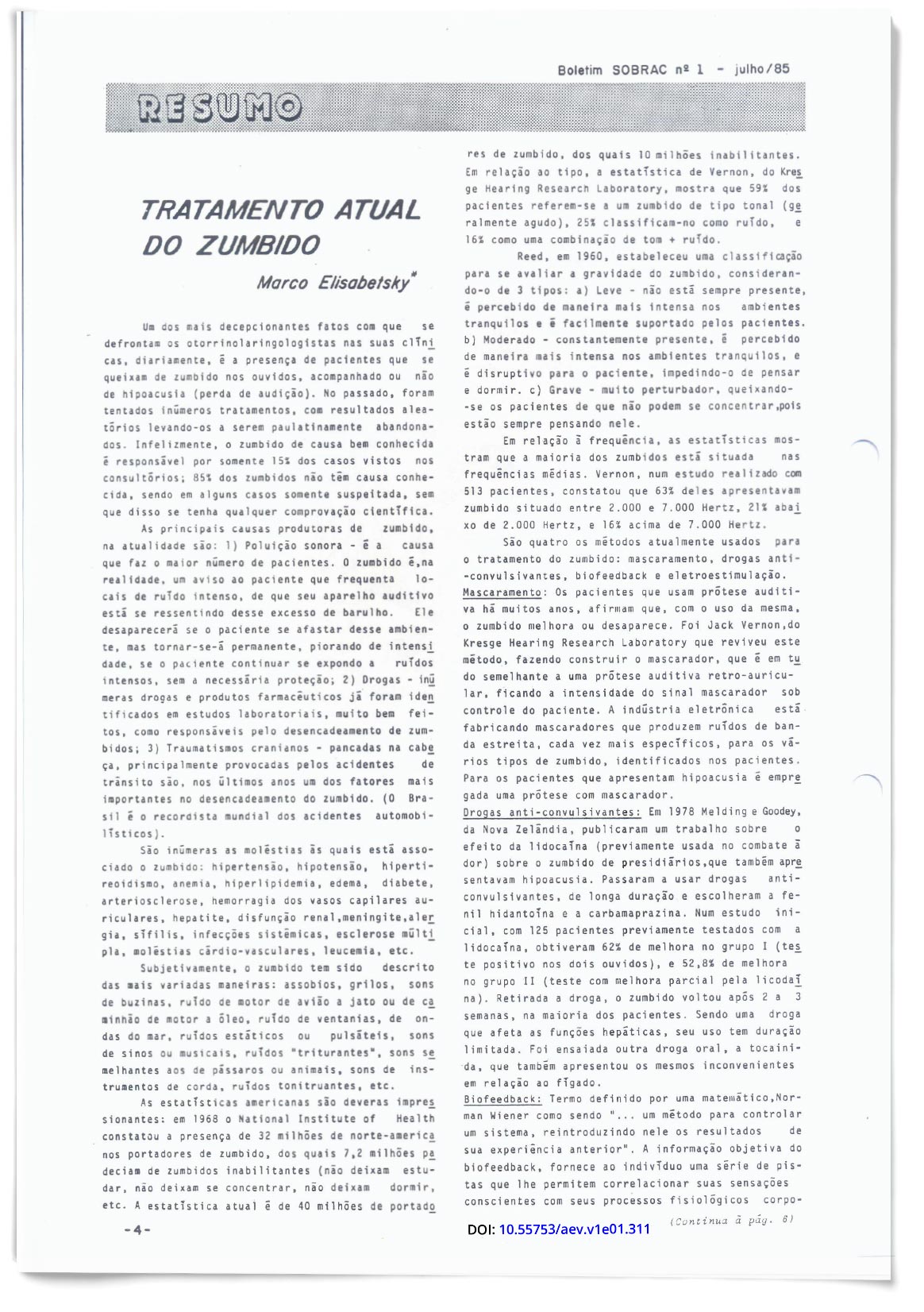
Current treatment for tinnitus
DOI:
https://doi.org/10.55753/aev.v1e01.311Keywords:
zumbido, audiçãoAbstract
The text paints a picture of tinnitus that is both clinical and human: a frequent, multifaceted symptom that is often frustrating for patients and professionals alike. The diversity of subjective descriptions shows that tinnitus is not just “a sound,” but a sensory and emotional experience that can invade silence, compromise sleep, and impair attention. The hardest fact is uncertainty: most cases have no clearly demonstrable cause, which shifts the focus from “curing” to “managing” with prudence and realism. Statistics reinforce the collective dimension of the problem, while the discussion of frequency and types suggests that measuring and classifying helps to organize care without reducing the uniqueness of suffering. In terms of treatment, the text reveals a historical journey of attempts: masking, drugs, biofeedback, and electrostimulation, each offering partial benefits and concrete limitations, including adverse effects. Ultimately, the message is that understanding tinnitus requires integrating body, environment, and mind, and that relief can be as valuable as explanation.
Downloads
Published
How to Cite
Issue
Section
License
Copyright (c) 1985 Acoustics and Vibrations (Acústica e Vibrações)

This work is licensed under a Creative Commons Attribution-NonCommercial-ShareAlike 4.0 International License.